
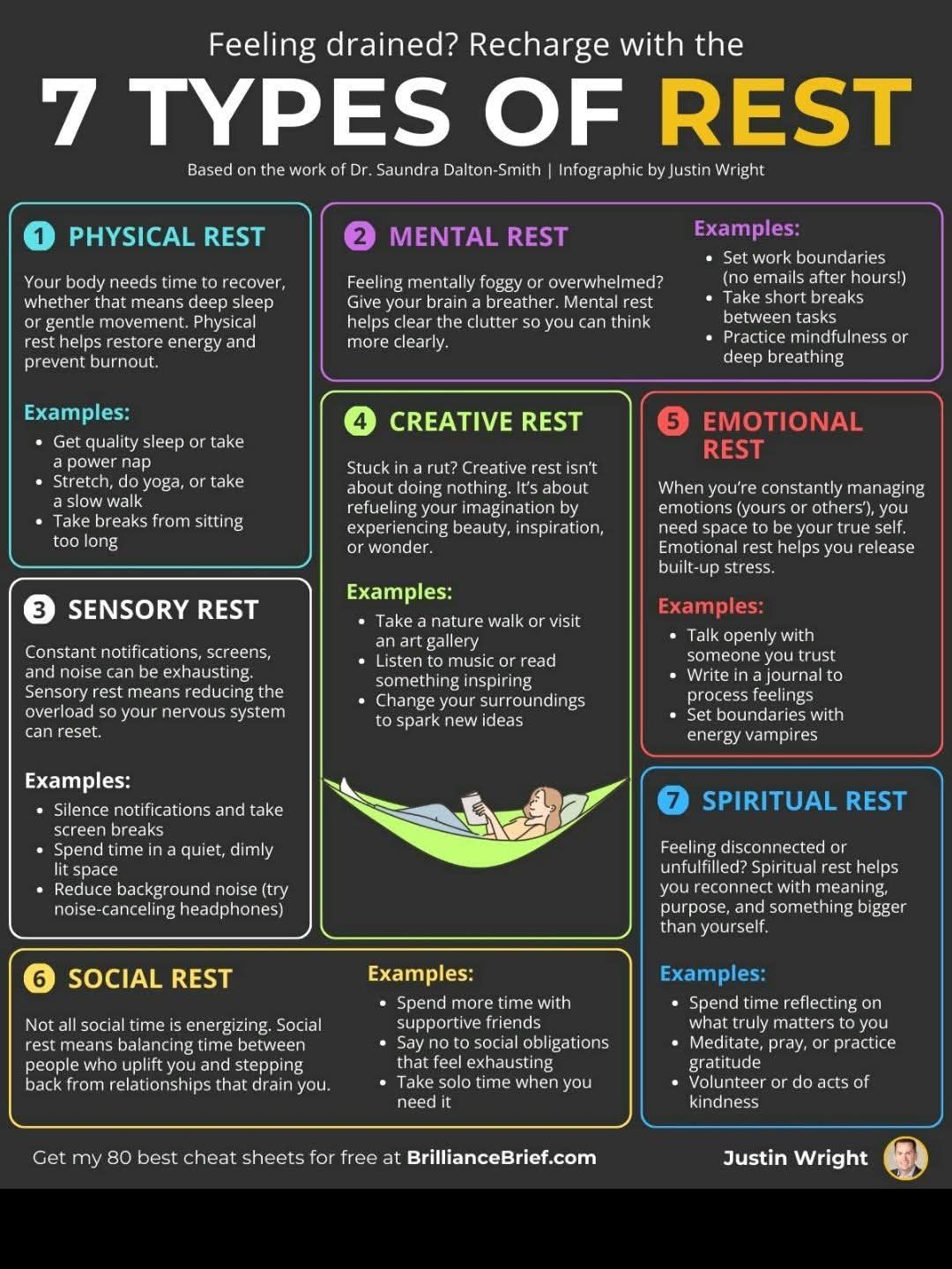
In today’s go-go-go world, it’s easy to think that “rest” simply means sleeping more or taking a day off. But according to Dr. Saundra Dalton-Smith’s powerful framework—beautifully summarized by Justin Wright in a recent infographic—true rejuvenation is much more layered.
There are 7 types of rest we all need to thrive, not just survive. If you’ve ever felt exhausted even after a full night’s sleep, chances are you’re neglecting one or more of these crucial areas. Let’s break them down:
1. Physical Rest
Your body needs time to recover—period. Whether that looks like deep sleep or gentle movement like stretching or yoga, physical rest is essential for restoring your energy reserves and preventing burnout.
Examples:
- Get quality sleep or take a power nap
- Stretch, do yoga, or go for a slow, mindful walk
- Take regular breaks from sitting too long
2. Mental Rest
Ever felt mentally foggy even though you’ve “rested”? That’s a sign you need mental rest. It’s about giving your mind a breather, helping clear mental clutter so you can think more clearly.
Examples:
- Set work boundaries (no emails after hours!)
- Take short breaks between tasks
- Practice mindfulness or deep breathing
3. Sensory Rest
Modern life bombards us with notifications, screens, bright lights, and noise—leaving our nervous systems frazzled. Sensory rest means intentionally reducing this overload to reset.
Examples:
- Silence notifications and limit screen time
- Spend time in a quiet, dimly lit space
- Use noise-canceling headphones to reduce background noise
4. Creative Rest
Creative fatigue is real. If you’re stuck in a rut, creative rest can refuel your imagination by reconnecting with beauty, inspiration, and wonder.
Examples:
- Take a walk in nature or visit an art gallery
- Listen to inspiring music or read uplifting stories
- Change your surroundings to spark new ideas
5. Emotional Rest
When you’re constantly carrying emotional weight—yours and others’—you need a space to be truly authentic and unfiltered. Emotional rest helps release built-up stress and reconnect with your genuine self.
Examples:
- Talk openly with someone you trust
- Write in a journal to process emotions
- Set boundaries with people who drain your energy
6. Social Rest
Not all socializing is energizing. Social rest involves balancing your social interactions, spending time with those who uplift you, and creating space from draining relationships.
Examples:
- Spend time with supportive friends
- Say “no” to exhausting social obligations
- Take solo time when you need to recharge
7. Spiritual Rest
Spiritual rest taps into something deeper—your connection to purpose, meaning, and the world around you. It’s about feeling fulfilled, grounded, and aligned with your values.
Examples:
- Spend time reflecting on what truly matters to you
- Meditate, pray, or practice gratitude
- Volunteer or do acts of kindness
Final Thoughts: Rest Is a Whole-Person Experience
Rest isn’t one-size-fits-all—and it’s not a luxury. It’s a necessity. By understanding the seven different types of rest, you can start intentionally tending to the areas you’ve been neglecting and finally feel the deep replenishment your mind, body, and soul deserve.
Start small: Identify just one type of rest you need most right now and take a simple action today. Your future self will thank you.


