
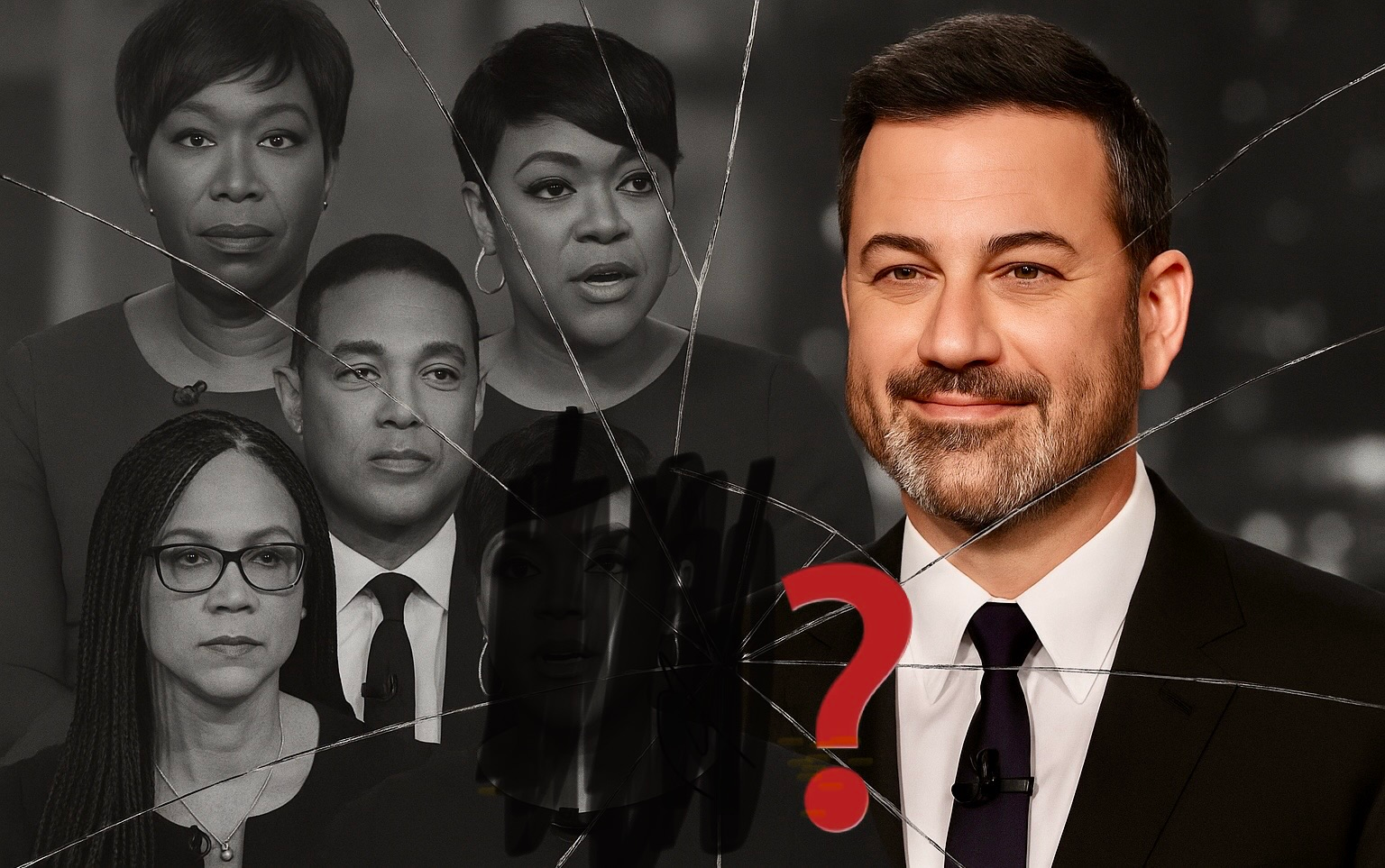
Jimmy Kimmel is back.
After ABC/Disney suspended Jimmy Kimmel Live! following “controversial” remarks about Charlie Kirk’s assassination, the network has announced that his show will return. Support poured in from fans, fellow comedians, unions, celebrities, and free speech advocates.
That’s wonderful. I love that for him. But it also has me thinking… Who else should’ve gotten this grace? Who didn’t? Who still doesn’t?
Remembering Those Who Weren’t Given the Same Hand
- Melissa Harris-Perry (2016): Her show was repeatedly preempted, her editorial control questioned, and eventually she parted ways with MSNBC. Many saw this as a case not of content, but of whose voice gets “priority” or protection.
- Tiffany Cross, Joy Ann Reid, and Don Lemon, media voices who were let go, silenced, or marginalized. Their departures weren’t met with the kind of public outcry or solidarity that we saw rally around Jimmy Kimmel.
- And there are thousands of less well-known people, especially Black women in media, many in production, writing, behind-the-scenes roles, or smaller outlets, whose voices get snuffed out without headlines.
The Disparity is Real
Seeing Kimmel reinstated after a unified public push, unions, fans, fellow media figures reminds us that public visibility, celebrity, networks of support, and institutional clout can make all the difference. For others, particularly Black women in media, these resources are often missing or weaker.
I saw a report recently about over 300,000 Black women struggling after losing their jobs right now. (If someone has the exact source, I’d cite it directly, but even without a specific study in front of me, this aligns with widespread data that shows women, especially Black women, have been disproportionately impacted by layoffs, media cuts, and unemployment. Think back to post-COVID layoffs, to budget cuts in newsrooms, to production assistants, writers, voice-overs, etc.)
Pop Culture, Social Media, and Public Outcry
The Kimmel case followed a predictable arc:
- The triggering event: Kimmel’s remarks about political exploitation in light of a tragedy.
- Backlash from conservative media/affiliates and regulatory threats (e.g., from the FCC).
- Public and celebrity solidarity: people signing letters, calling out the censorship, defending speech.
- Negotiations behind the scenes and reinstatement.
We saw similar patterns with protests on social media when other media personalities were silenced: fans mobilizing, trending hashtags, and networks getting questioned. But those moments often fade quickly, especially when the person affected doesn’t already have fame, institutional protection, or a platform to fight back.
Why This Matters
- Voices in Media Shape Narratives. If Black women aren’t protected, fewer stories get told, and fewer perspectives get heard. Pop culture and news shape public perception, policy, empathy.
- Unequal Protection = Unequal Power. When people with privilege (fame, network, male adjacency, etc.) are defended harshly, it implies that others are less worthy of defense.
- Precedent. What happens now creates precedent. If networks see that removing someone is reversible when public outcry is strong, does that encourage them to avoid harsher punitive actions for those who have fewer advocates?
Who’s Protecting Us?
That’s the question. Who’s making sure that when a Black woman is disciplined, fired, or silenced, there’s a backup plan, there’s solidarity, and there’s accountability?
We need:
- Networks & Media Institutions to codify protection: fair contracts, clear standards of editorial freedom, and clear channels for grievances without retaliation.
- Unions & Associations should include those often marginalized in their ranks, so that when harm comes, it’s not just isolated individuals but a collective response.
- Audiences & Public Voice. Social media, grassroots movements, and consumer pressure play a role. Boycotts, letters, trending hashtags, press coverage—all of these have genuine impact.
- Peer Support. Media people supporting each other—using their platforms to amplify those without platforms.
Final Thought
Jimmy Kimmel’s return is a win, for him. But it should be a lesson for all of us.
Let it remind us that voice = power. And that if we want justice in media, if we want spaces where all of us are protected, we’ve got to fight for those protections even when we’re not in the spotlight.
Because grace should not be a privilege reserved for the famous or well-connected. It should be a standard.


