
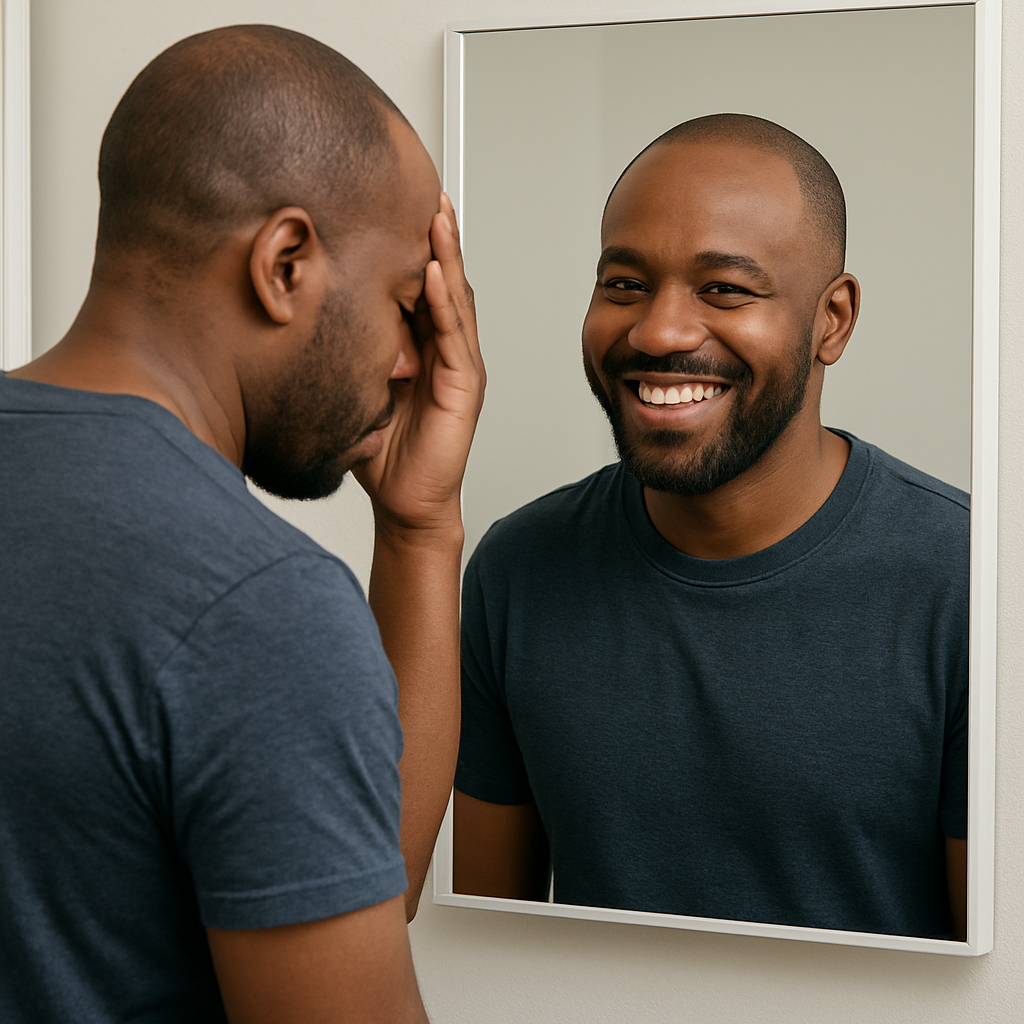
When Dean Amanda asked me what I don’t see in the mirror, the question cut deeper than it seemed. We often talk about the reflections we recognize, our tired eyes, our achievements, the layers of identity we carry like invisible name tags. But what about what’s absent? The unseen weight of deadlines, the hidden fatigue behind showing up, and the looming question of rest.
This exchange reminds me of how pop culture frequently illustrates the invisible burdens leaders, parents, students, and activists carry. Think about Issa Rae in Insecure, where her bathroom mirror raps weren’t about vanity but survival, talking herself through imposter syndrome and the weight of navigating systems not built for her. Or think of Kendrick Lamar’s Swimming Pools, a song that on its surface is about alcohol but really about the struggle to numb exhaustion. The mirror isn’t always a reflection of who we are; it’s a confrontation with who we’re trying to be.
On social media, we curate images that show the polished version of ourselves, filtered, framed, captioned with hustle-culture affirmations like “No days off” or “Sleep when you’re dead.” But behind every #RiseAndGrind post, there’s often a story of burnout. TikTok trends now reveal this contradiction, the “That Girl” aesthetic is being challenged by creators who film themselves lying in bed at 3 p.m. with the caption, “That girl is exhausted.”
Historically, the mirror has always been metaphorical. W.E.B. Du Bois’ concept of double consciousness wasn’t just about race, it was about what society sees versus what we see in ourselves. The civil rights leaders we admire, King, Malcolm, Fannie Lou Hamer, carried the fatigue of systems beyond their control while maintaining the image of strength. Hamer herself said, “I am sick and tired of being sick and tired,” a truth that still reverberates today in Black professionals, students, and leaders who juggle identities and obligations.
When I answered Dean Amanda, I realized the irony: I said I don’t see the weight in the mirror, but maybe that’s exactly what’s there, hidden in plain sight. My goals are often mediated by systems beyond me, university policies, community responsibilities, cultural expectations. The mirror doesn’t show bureaucracy, but it does show the fatigue it creates.
The truth is, achieving one goal only clears the space for another. The absence of concern I long to see in the mirror is temporary. Contentment is fleeting because mission-driven people, like those Dean Amanda pointed out, rarely stay still. History remembers the restless, those who kept going. Pop culture dramatizes them. Social media sells us their image. But in real life, we wrestle with whether rest is a pit stop or a mirage.
So the question remains: when we finally see ourselves in the mirror without deadlines, without meetings, without concessions, what then? Is it peace? Or just a pause until the next pursuit begins?
As the meme says: “You can’t pour from an empty cup.” But the grind culture we live in convinces us that the cup will refill itself if we just keep moving.
Perhaps the real challenge isn’t to ask, what do I not see? but to ask, when will I let myself see rest as the goal itself?


