
There’s something quietly powerful about seeing your name, your full name, written by someone else — an acknowledgment, a respect, a nod to your existence and the story behind it. And there’s something equally unsettling when that name is mishandled, reordered, or misspelled, even by those who mean well.
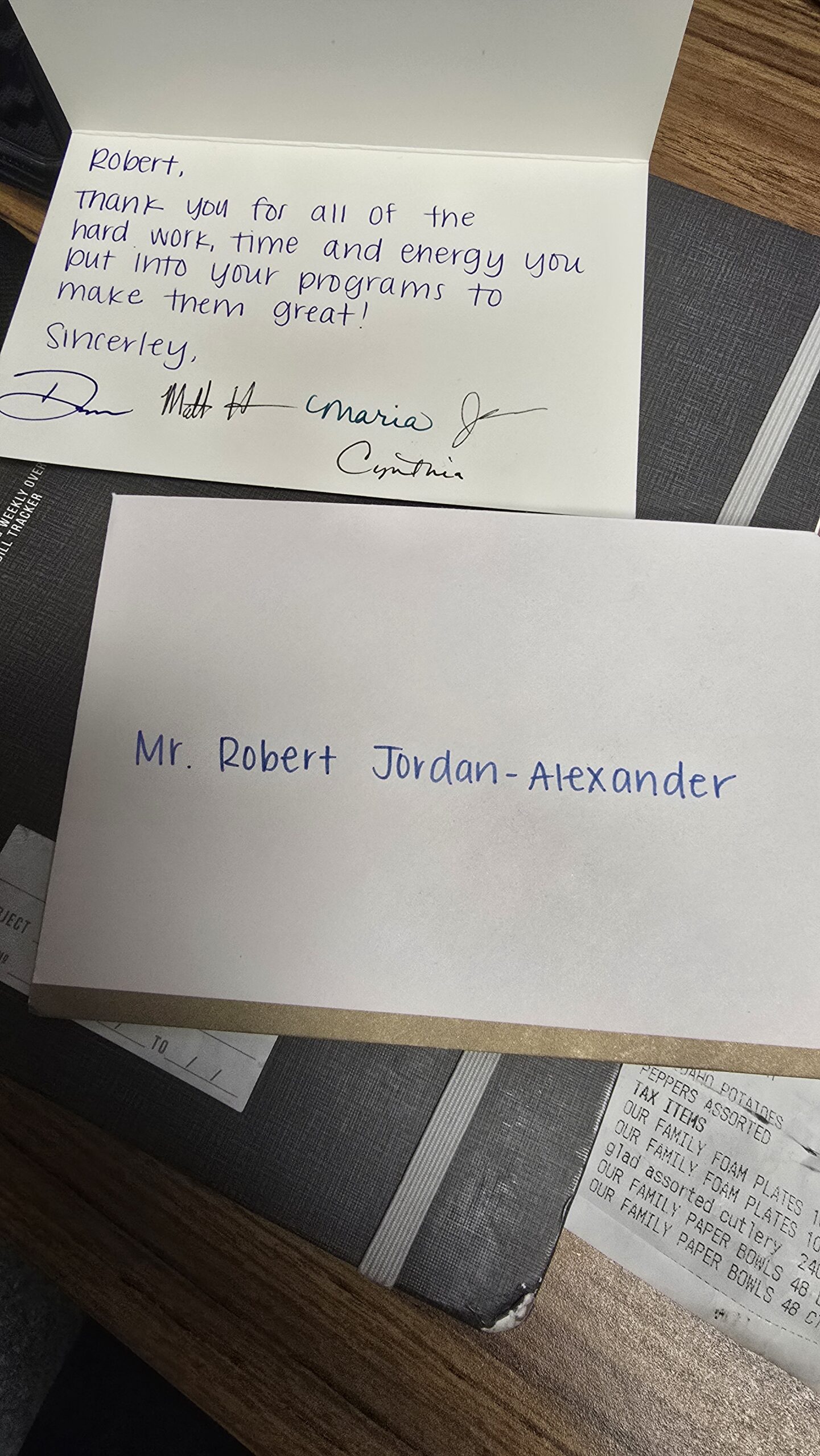
Recently, I received a thoughtful thank-you card from colleagues appreciating the hard work, time, and energy I’ve poured into my programs. The card was genuine, heartfelt, and even hand-signed by multiple people — a rare thing in a world that often defaults to a two-line email. For that, I am truly grateful.
But when I looked closer at the envelope, I noticed a mistake that stung more than I expected:
The name read “Mr. Robert Jordan-Alexander.”
Not only is that not my name — it’s the inversion of two important legacies. My actual name is Robert Alexander-Jordan, and the order is not accidental. It’s deliberate. It’s personal. It’s history. It’s family.
The Importance Behind the Name
Alexander honors my grandfather — a man whose strength, perseverance, and lessons helped shape the person I am today. His name being first is symbolic of the foundation he laid, the starting place of the story.
Jordan honors my grandmother — the quiet force behind the scenes, the nurturer, the wisdom-bearer, the one who ensured the seeds planted by generations before me would grow.
Their names are stitched into mine like heirlooms — permanent, proud, and intentional.
Getting it right isn’t just about proper nouns and paperwork; it’s about respecting the history I carry with me every day.
“It’s Just a Mistake” — But Is It?
Some might say, “It’s just a small mistake,” and technically, yes — it’s one word out of place. But words matter. Names matter.
Especially for people from communities whose names have been anglicized, mispronounced, erased, and mocked for centuries, getting the name right is an act of recognition. It says, “I see you. I respect the story you bring into the room.”
When we ask for our names to be honored — spelled right, ordered right — we’re not being petty or difficult. We are asking you to honor the fullness of who we are.
You don’t have to understand every detail behind someone’s name to respect it. You simply have to care enough to ask, listen, and correct yourself when needed.
To My Colleagues: You’re Welcome — And a Gentle Reminder
To those who took the time to thank me, I sincerely say: You’re welcome.
The work I do comes from a place of pride, commitment, and deep responsibility to my students and programs.
But just as you honored my work, I ask in return that you honor my name.
It’s Alexander-Jordan, not Jordan-Alexander.
It’s legacy first, legacy second — together.
That is the story. That is the name. That is the respect owed.
Final Thought: See the Whole Person
The next time you find yourself addressing someone — whether in a card, an email, a meeting, or a casual conversation — pause and make sure you are honoring them fully, name and all.
You might just be honoring their grandparents too.
Because in every name, there is a story — and every story deserves to be told correctly.


