
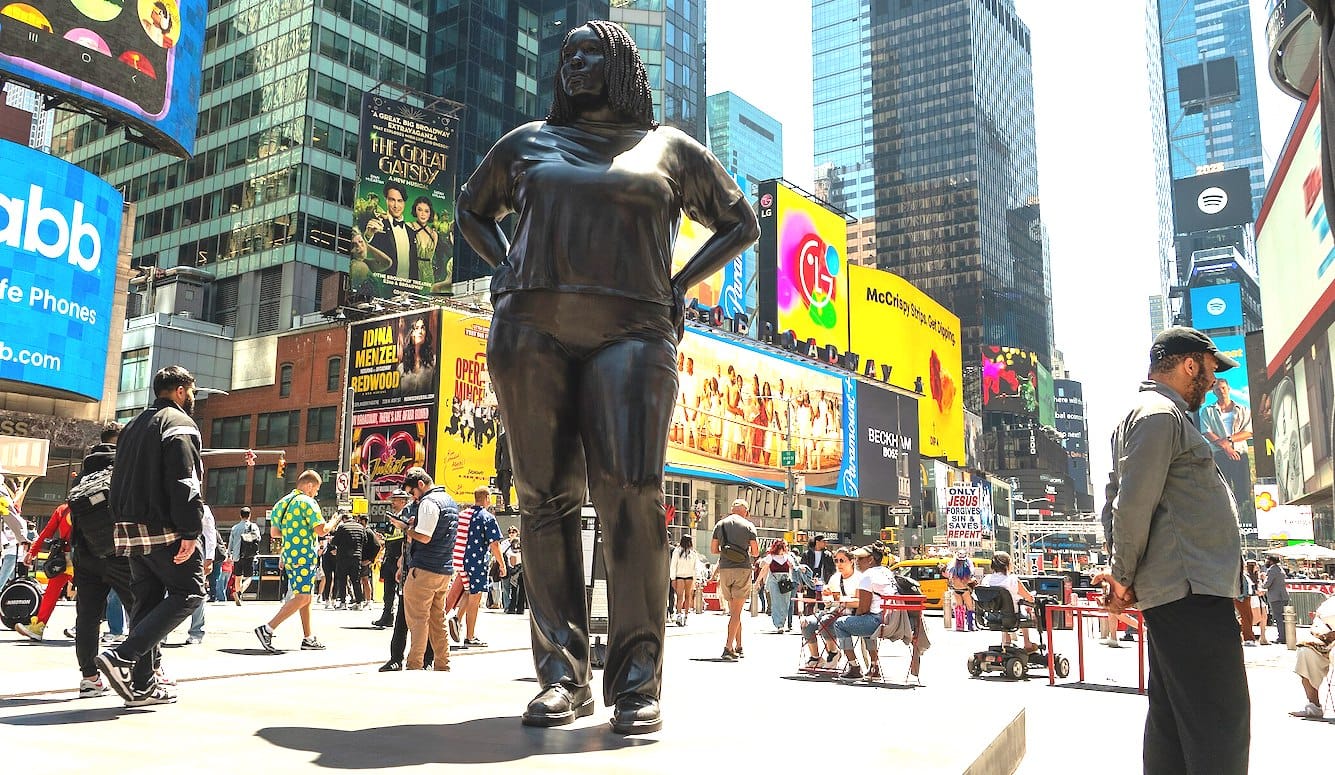
When British artist Thomas J Price unveiled Grounded in the Stars, a 12-foot bronze statue of a fictional Black woman, it was meant to be a celebration—a bold, unapologetic assertion of presence, dignity, and resilience. But, predictably, it’s become a flashpoint for outrage, particularly from the kind of people who have always struggled with seeing Black women as anything other than stereotypes, caricatures, or threats.
Franchesca “Chescaleigh” Ramsey—actress, writer, and outspoken advocate—summed it up perfectly in her viral response to the backlash: “The bigots and self-hating pickmes are up in arms… which just proves why it needs to exist.”
The Statue: A Symbol and a Mirror
Let’s get one thing clear: Grounded in the Stars is not a tribute to a celebrity, activist, or political figure. It’s a tribute to Black womanhood in its ordinariness. That’s exactly why it’s so revolutionary—and so threatening to those who have spent generations defining Black women through the narrow lens of servitude, sass, or suffering.
The figure stands strong and still, wearing leggings and a t-shirt—everyday clothes on an everyday woman. And yet, that’s the trigger. To some, she’s “angry,” “masculine,” “hostile,” or worse. But those reactions are not about the statue. They’re a reflection of the viewers’ own internalized biases, particularly the venomous cocktail of racism and sexism known as misogynoir.
Coined by Moya Bailey, misogynoir refers specifically to the unique forms of discrimination that Black women face—a mixture of racism and misogyny that dehumanizes and demonizes their bodies, voices, and presence. In this case, it’s playing out in real-time through meme-worthy hate comments, tone-policing, and claims that the statue is “unapproachable” or “not beautiful enough.”
But Whose Beauty Standard?
What becomes apparent through the public reaction is this: many are deeply uncomfortable with a Black woman—especially one who doesn’t conform to Eurocentric beauty standards—being publicly honored without first being palatable to the white gaze. She isn’t smiling. She isn’t dressed for your comfort. She isn’t entertaining or explaining herself.
She’s just being.
And in a world where Black women are rarely allowed that freedom, that stillness becomes radical.
Art as Resistance, Not Decoration
Ramsey points out that Price’s intent was to challenge the idea of who is worthy of being memorialized. If statues are supposed to represent the ideals and values of a society, then Grounded in the Stars is an audacious act of reclamation. It says: our beauty, our complexity, our right to take up space doesn’t need to be justified.
This isn’t about perfection. It’s about presence. The statue doesn’t exist to comfort the viewer. It exists to center the subject.
And let’s not gloss over the fact that this is a fictional woman. She’s not burdened by anyone’s expectations of “respectability” or fame. She is everywoman—a vessel of representation for those who’ve rarely been granted statues, let alone the right to simply walk the streets unbothered.
Why It Matters
For centuries, Black women have been forced to smile through discomfort, perform softness to avoid violence, and dilute their authenticity to make others feel safe. In schools, workplaces, hospitals, and on sidewalks, they are policed, surveilled, and silenced.
This statue dares to confront that legacy.
It dares to say:
- You don’t need to be famous to be honored.
- You don’t need to be smiling to be seen.
- You don’t need to be palatable to be powerful.
And perhaps most importantly: you don’t need to apologize for existing.
Let Her Stand
The reaction to Grounded in the Stars is not really about art. It’s about discomfort. And discomfort is the raw material of transformation. What we’re witnessing is a society still grappling with the radical idea that Black women do not exist to be explained, fixed, or formatted.
They exist.
They lead.
They create.
And they deserve to be immortalized, not just in textbooks or Instagram posts—but in bronze, 12 feet tall, for all the world to see.
So as Ramsey said, “This fictional Black woman doesn’t have to be all things to everyone. She is allowed to just be.”
And that, my friends, is enough.
#GroundedInTheStars #BlackWomenDeserveStatuesToo #Misogynoir #PublicArtMatters #RepresentationIsPower


