
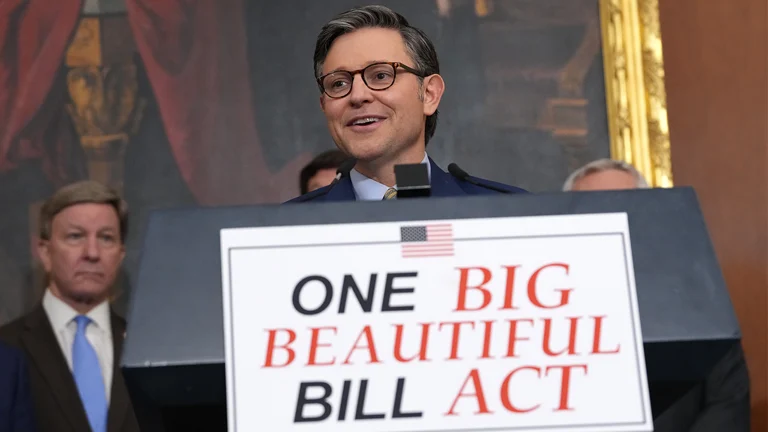
On May 22, 2025, the U.S. House of Representatives passed something called the “One Big Beautiful Bill Act” (also called H.R. 1). That’s not just a catchy name—it’s a massive piece of legislation, over 1,000 pages long, touching almost every part of American life. Supporters are calling it bold and transformative. But critics? They say it’s a dangerous rollback of basic rights and protections that many Americans rely on to survive.
Let’s talk about what’s actually in this bill, how it affects everyday people, and why civil rights groups and social justice advocates are sounding the alarm.
Big Tax Breaks for the Rich, Small Relief for the Rest
One of the major parts of the bill is focused on taxes. It makes the 2017 Trump-era tax cuts permanent. That might sound okay at first—who doesn’t want to keep more money? But here’s the issue: most of the money from these tax cuts goes to the wealthiest Americans and big corporations.
For example:
If you make over $500,000 a year, you’ll get thousands of dollars in tax savings. But if you’re a working-class parent with two kids trying to get by on $45,000 a year? Your savings might barely cover a monthly phone bill.
The bill also raises the cap on what homeowners can deduct for state and local taxes (called SALT deductions), but only if they earn under $500,000. This benefits homeowners in wealthier states more than low-income renters anywhere.
Why it matters: This kind of tax policy widens the gap between the rich and the rest of us. It gives more financial power to people who already have a lot, while people in need get left behind.
Cuts to Healthcare and Attacks on LGBTQ+ Rights
Another major section of the bill deals with healthcare—and not in a good way. It introduces strict work requirements for people who use Medicaid. That means if you’re not working enough hours each week or don’t have the right paperwork, you could lose your coverage.
Even more alarming: the bill bans Medicaid and CHIP (Children’s Health Insurance Program) from covering gender-affirming healthcare for transgender people—including children and adults.
Why it matters:
Millions of low-income Americans rely on Medicaid. For many, it’s the only way to see a doctor, get medicine, or have surgery. Removing this access punishes people who are already struggling. And banning gender-affirming care not only erases the rights of trans people—it puts lives at risk. Major medical groups agree that gender-affirming care is life-saving and necessary.
Less Help for Food, Rent, and Survival
The bill cuts funding to programs like SNAP (food stamps). It also adds work requirements, just like with Medicaid. If you’re an adult without kids and can’t prove you’re working, you could lose your food benefits.
Let’s say: you’re 25, just lost your job, and need a couple of months to get back on your feet. Under this bill, you might not qualify for food assistance—even if you’re applying to jobs every day.
Why it matters: These programs are not “free handouts.” They are life-saving safety nets. Removing them doesn’t encourage responsibility—it pushes people deeper into poverty. If someone is hungry or sick, it’s much harder for them to find and keep a job.
Harder Borders, Harsher Immigration Policies
The “One Big Beautiful Bill” sets aside $70 billion to “secure the border.” This includes more fences, high-tech surveillance, more agents, and more space to detain and deport people.
The bill allows for up to 1 million deportations a year, prioritizing speed and volume over due process.
Why it matters: This type of mass deportation policy increases the risk of people being wrongfully detained or separated from their families. It also makes life scarier for immigrants—documented and undocumented alike. It criminalizes entire communities based on where they were born.
Weakening the Power of the Courts
One of the more hidden parts of the bill changes how the courts work. It limits federal judges’ power to punish government officials who break the law—unless the person suing them pays a bond first.
That may sound small, but it’s not.
Imagine: A government agency violates someone’s civil rights. That person takes them to court. Under this bill, the court might not be able to enforce its ruling without the person paying thousands of dollars up front. This makes it much harder for everyday people to hold those in power accountable.
Why it matters: The justice system is already hard to navigate. This makes it even tougher, especially for marginalized groups who often rely on the courts to fight discrimination and abuse.
So… What’s the Big Picture?
This bill is being sold as a “clean-up” of the system—but in reality, it’s a consolidation of power, wealth, and influence into fewer and fewer hands. It does not uplift working families, vulnerable people, or communities of color. It strips away protections under the guise of reform.
Key Takeaways:
- It helps the wealthy at the expense of working-class and poor Americans.
- It rolls back civil rights for transgender people and immigrants.
- It cuts vital services like food and healthcare when people need them most.
- It limits the courts’ power to protect the public from government overreach.
Final Thoughts
Whether you lean left, right, or somewhere in between, one thing is clear: this bill will reshape what freedom, fairness, and dignity look like in America. And not for the better.
We must ask: Who does this bill serve? Who gets left behind? And what kind of country do we want to be?
There’s still time for the Senate to reject or revise the bill. Let your voice be heard—call your senators, write to your representatives, and stay informed. Because if passed as is, the “One Big Beautiful Bill” could become a long, painful chapter in the American story.
Sources:
Image was originally featured here.


