
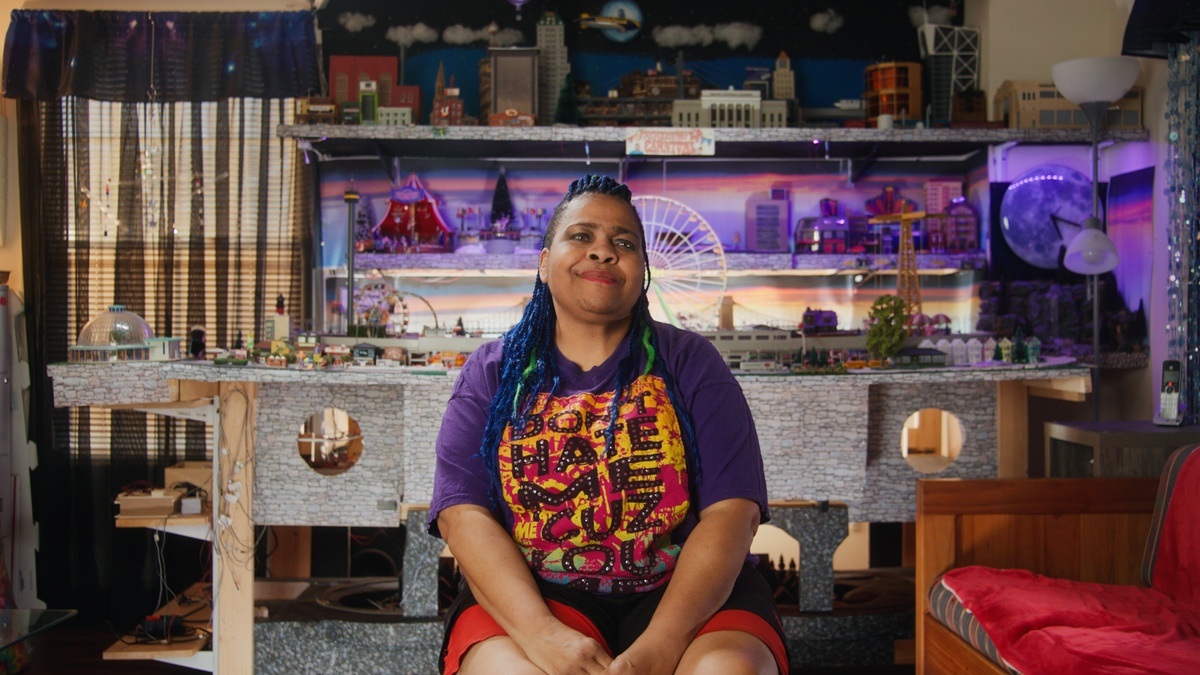
In a landscape overflowing with romance and documentary films, Patrice: The Movie emerges as something rarer: a heart-forward, politically searing love story that demands systemic change. Directed with care and urgency by Ted Passon, this 1-hour-42-minute documentary-biography, now streaming on Hulu, is less about a traditional romance and more about the radical right to have one.
Following the real-life story of Patrice Jetter and Gary Wickham, Patrice: The Movie confronts the heartbreaking intersection where love, disability, and outdated legislation collide. Both Patrice and Gary, disabled and deeply in love, face a cruel choice: if they marry, they risk losing their Supplemental Security Income (SSI) benefits and Medicaid coverage—essential lifelines in a world not built to accommodate them.
At the core of the film is a gutting but simple truth: systems designed decades ago still fundamentally deny disabled people their humanity. Through Patrice and Gary’s battle, Passon illuminates how society punishes disabled people for wanting the most basic, universal things: love, companionship, and dignity.
Patrice and Gary are electric on screen—funny, stubborn, vulnerable. Their chemistry is palpable as they dream about weddings and commitment ceremonies, only to be reminded at every turn that their future together comes with a devastating price tag. A particularly wrenching moment arrives early, when a disability rights lawyer coldly explains that even cohabitation could lead to benefits being cut off.
“They punish you for feeling feelings everybody else feels,” Gary says, heartbreak saturating every word. And it’s not hyperbole—it’s the reality of a benefits system with a combined asset limit of just $3,000 for married disabled couples. In a modern world where the cost of living skyrockets daily, that figure feels less like policy and more like cruelty.
When Patrice’s accessible van breaks down, further threatening her livelihood as a school crossing guard, the barriers to even having a symbolic commitment ceremony multiply. The tension mounts not just emotionally but economically—a reminder that love, when placed against systemic injustice, can become a daily battle for survival.
Though it is wrapped in the accessible, crowd-pleasing tones of a documentary rom-com, Patrice: The Movie is ultimately a fierce piece of activism. The film’s heartbeat is the social model of disability, which posits that the barriers disabled people face are societal, not individual.
Importantly, the film respects its subjects’ privacy. Gary’s cerebral palsy is briefly mentioned, but Patrice’s diagnosis is never disclosed—a meaningful departure from the voyeuristic medicalization that often plagues portrayals of disabled lives. What matters is not their diagnoses but their humanity, their desires, their agency.
Through flashbacks to Patrice’s upbringing—her special education, brushes with institutionalization, and fraught maternal relationship—the movie builds a full portrait of a woman who has fought her entire life to exist unapologetically. It’s a life story rarely told, and even more rarely honored with such reverence.
Patrice: The Movie also zooms out, tracing the legislative fight for marriage equality for disabled adults. Patrice and her friend Elizabeth visit Congressman Jimmy Panetta, sponsor of the Marriage Equality for Disabled Adults Act, a bill that remains mired in Congressional inertia.
Other efforts, such as the Muscular Dystrophy Association’s advocacy to raise the SSI asset limit, are noted but not directly featured, giving viewers a broader understanding of the systemic gridlock preventing real change. Paul Melmeyer of MDA recounts gutting anecdotes—including couples considering divorce just to retain their healthcare—underscoring how love itself is treated as a liability under existing law.
The film’s emotional crescendo is a gorgeous, defiant march of disabled couples adorned in wedding attire, demanding the right to marry without punishment. It’s joyous, angry, and transcendent all at once—a community saying, “We will not be invisible.”
Patrice, taking center stage, delivers a rousing call:
“We would like to get married and be able to go to the doctor. We would like to get married and be able to buy groceries and medicine. We would like to get married and be able to pay rent and bills and not end up living in the cardboard box. By the powers invested in me, I pronounce you all TOGETHER.”
It is one of the most stirring moments of documentary filmmaking this year—a moment that feels historic, even as the wheels of policy remain agonizingly slow to turn.
Ted Passon’s Patrice: The Movie is not just a celebration of one couple’s love—it’s a rallying cry for marriage equality, disability justice, and fundamental human dignity. Funny, heartbreaking, and deeply urgent, it lays bare the cruelty of a system that forces people to choose between love and survival.
Patrice and Gary’s story reminds us that civil rights battles aren’t relics of the past—they are happening right now, in the lives of millions.
At once intimate and expansive, Patrice: The Movie asks a simple, devastating question: When will we finally make space for every kind of love?


